Job-hunting Support Lecture BASICS OF JOB-HUNTING and RESIDENTIAL STATUS was held in June and October.
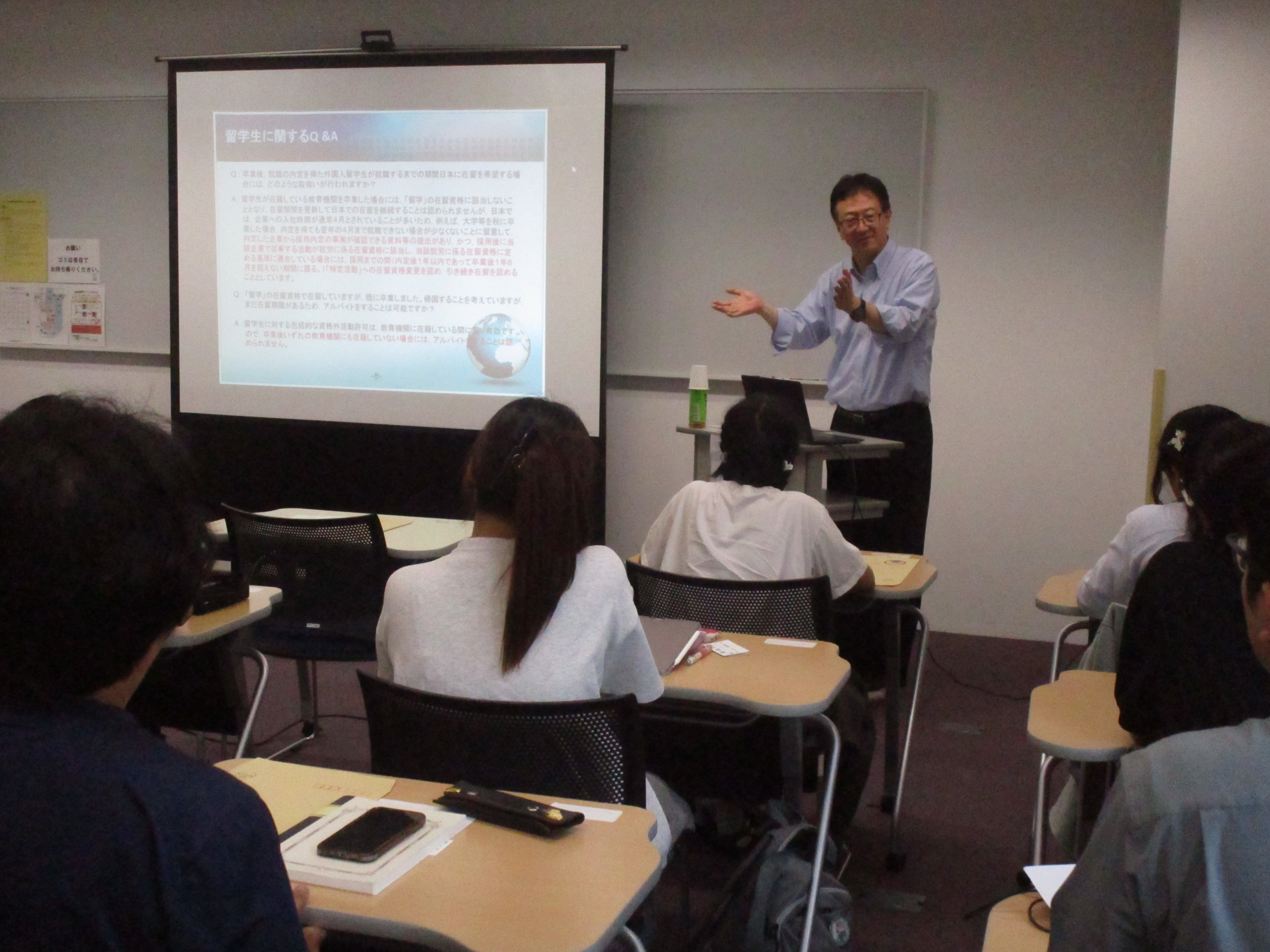
Shizuoka Association for International Relations, under the auspices of The Consortium of Universities and Local Communities in Shizuoka, held a job-hunting support lecture for international students wishing to work for companies in Shizuoka Prefecture, to help them acquire the knowledge and manners necessary for employment and deepen their understanding of the industries and companies in Shizuoka Prefecture.
Here is the report on the Basics of Job-hunting and Residential Status.
Shizuoka
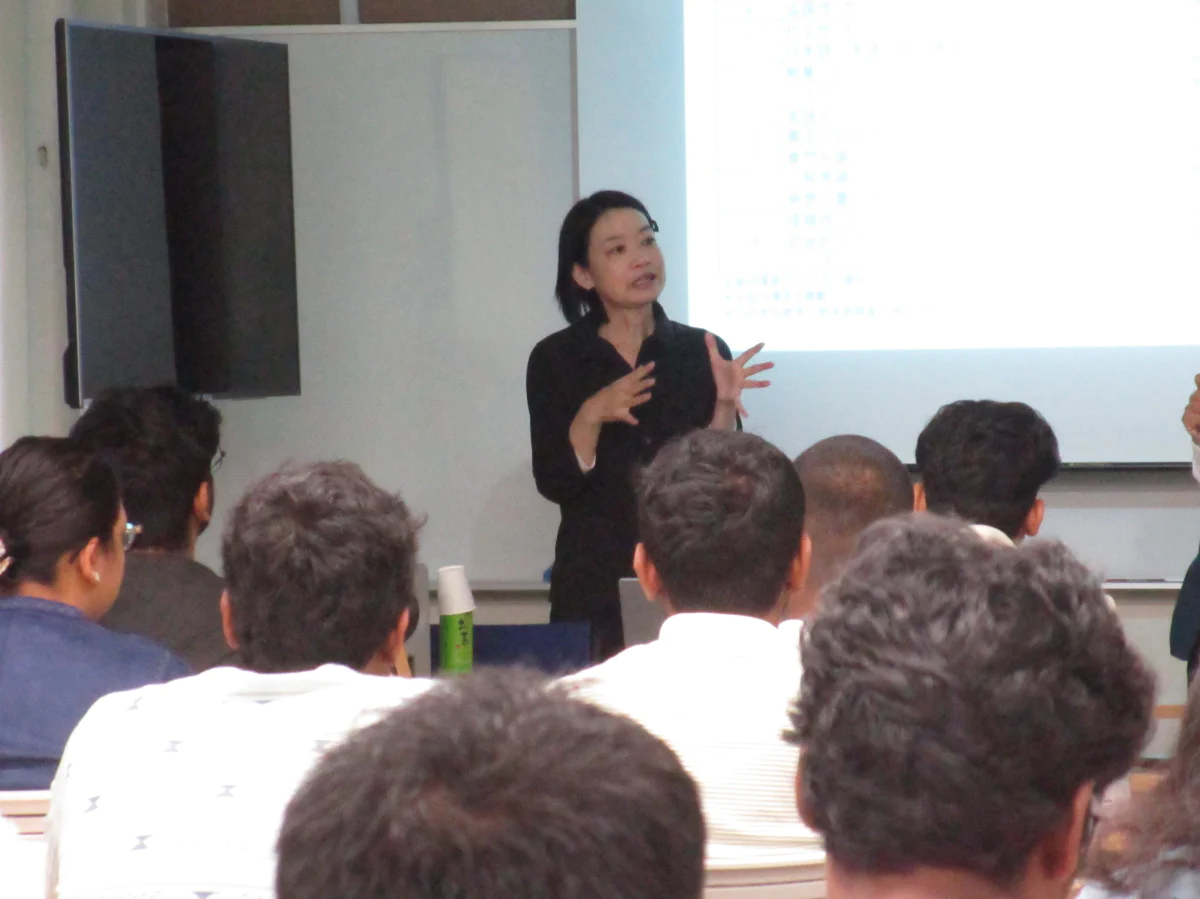
Lecturers: Career Counselor Naoko Noguchi / Administrative Scrivener Shinobu Kuroda
Date: June 28th 2:30 - 4:30 pm
Place: B-nest Shizuoka City Industry-Academia Exchange Center 7th Floor Seminar Room 4
Number of participants: 19
Hamamatsu
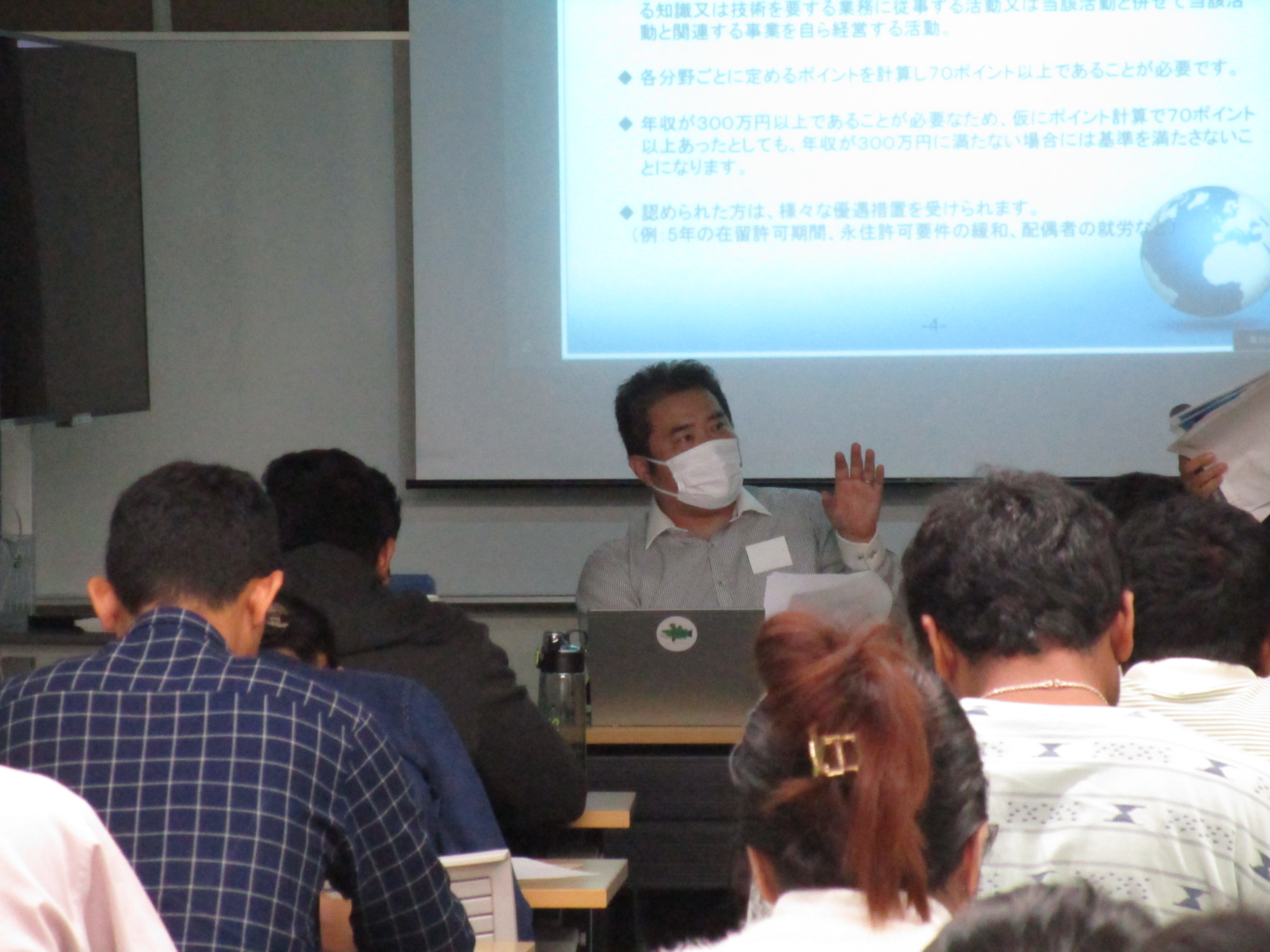
Lecturers: Career Counselor Naoko Noguchi / Administrative Scrivener Daisuke Yamauchi
Date: October 25th 1:30 - 3:30 pm
Place: Shizuoka University Hamamatsu Campus Faculty of Engineering Building 7-11 and online(Zoom)
Number of participants: 30 (25 in person and 5 online)
The first half covered the fundamentals of job-hunting. They learned about what Japanese companies seek in international students, the differences between job-hunting and employment practices in Japan and overseas, the importance of Japanese language skills, and how to prepare for interviews.
When companies directly hire foreign talent from overseas, they often take on responsibilities like providing living support. On the other hand, international students have the advantage of already being familiar with Japanese customs and rules. A key characteristic in Japan is that many university students begin their job search simultaneously, with most joining companies on April 1st. Balancing studies and job-hunting during the final year of university or graduate school requires early preparation. They were advised to actively share information not only with fellow international students but also with Japanese students.
Furthermore, Japanese language ability ranks high among the qualities Japanese companies seek in international students. It was emphasized as crucial for building trust-based relationships with colleagues as a working professional. They were also advised that they don’t need to use honorific expressions, and it's best to speak politely using “desu/masu” form. Regarding interview preparation, they were introduced to common questions like “Why did you choose to study in Japan?” and “How long do you plan to work at this company?”, along with key points for answering them considering a Japanese traditional membership-based employment system. Participants shared feedbacks such as “I truly understood the importance of preparing in advance,” and “I want to clearly map out my job-hunting schedule.”
The latter half featured a lecture on residential statuses from an administrative scrivener. International students need to change their visa status from a student visa to one corresponding to their intended occupation when they get employed. The session covered residential statuses relevant to employment, including necessary procedures for changing statuses, specific activities permitted under each status, and examples of approved and denied cases. They also explained the process from receiving a job offer to graduation and employment. They emphasized the need to confirm details and start procedures with the hiring company promptly after receiving an offer, noting that applications can be submitted online. They then addressed common questions from international students: whether it's possible to transition directly from a part-time job to full-time employment, what to do after graduation in September, and whether a part-time job is allowed after graduation. Other important points covered included strict checks during application for any delinquent payments on National Health Insurance, pension insurance, or municipal/prefectural taxes, the pension exemption system, and exceeding part-time work limits. During the Q&A session afterward, students asked about post-graduation work restrictions, family stay visas, and permanent residency, reflecting their high level of interest. We hope all international students will apply the knowledge gained today about job-hunting and residential status to their job search in Japan.